
 Anti-poaching training specialised Conservation training
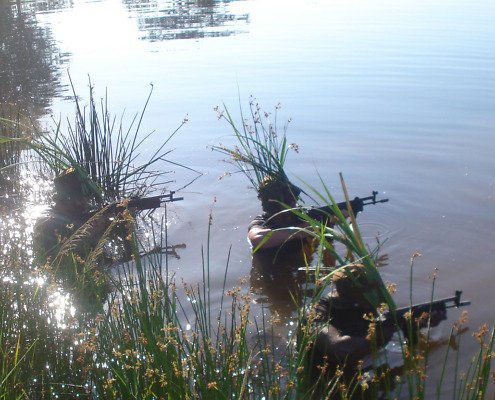
The anti-poaching course at Milites Dei Academy follows a special forces training approach by skilling students not only with an accredited firearms qualifications but also with combat training, dealing with animal behaviour, intense tracking exercises, gunshot approach, and much more as part of military training style. These trainees stay for days in the bush while tracking and doing surveillance exercises to gather intelligence. They practice bushcraft and survival skills. These students are also remarkably fit and practise the discipline of the drill.
Once completed they celebrate with a green beret at a step out ceremony because Milites Dei Academy is very proud of these guys and girls once they finish the course. They are then ready to join the specialised unit to battle against poaching.
FT2. The Six-Week Anti-Poaching Course
• If you love wildlife and love to protect animals at game lodges and reserves and to get into tactical security
Includes the Following COURSES:
4/2 X ACCREDITED FIREARM TYPES (HG, SG, SLR, MOR for Private and Business Use), for Private and Business Use
10 X MILITARY STYLE SKILLS SUBJECTS:
1. Drill, PT, Bungalow Cleaning and Inspection
2. Animal Behaviour
3. Tracking (Animal and Human)
4. Camo, Concealment and Waylay (Hasty and Deliberate)
5. Route Reference
6. Bush Craft and First Aid
7. Surveillance and OP
8. Fence Assessment
9. 2D and 3D Mapwork
10. CQC
SWAT BASICS SKILLS SUBJECTS
Positions and Movements, Climbing Techniques, Arrest and Search Procedures, Cover and Concealment, Hostile Environment, Valley Fire and Movement, Road Crossing and Formations, Vehicle Extraction, Bounding Overwatch and Travelling Overwatch, Cordon and Search
CERTIFICATES INCLUDED:
1. SWAT Basics Skills
2. Anti-Poaching
3. Military Style Skills Subjects
5. Workplace Experience
6. Rank
7. Firearms (Inhouse and PFTC)
8. Military Style
OTHER SERVICES INCLUDED:
Advice to Apply at SAPS if a South African
Gear on Loan
Accommodation
Meals per Day
CV
Active Assistance to Find Employment in South Africa and Outside South Africa
Urgently Contact Us on WhatsApp 0814788018 to Book Your Space
SAPS Training Provider No. 4001265, PFTC No. T2201002
QCTO Accreditations No. AC-TTC071025101951, AC-TTC171024201831, AC-TTC181025102723
OBJECTIVE AND JUSTIFICATION OF THE QUALIFICATION
Objective:
The goal of this part-qualification is to equip learners with the skills necessary to work as Anti-Poaching Rangers.
An Anti-Poaching Ranger plays a vital role in safeguarding the integrity of protected areas by adhering to relevant laws, management plans, rules, and guidelines. This involves complying with tactical, legal, safety, and organizational requirements related to specialized operations aimed at combating biodiversity crimes. Key traits of successful graduates will include leadership, discipline, teamwork, compassion, and commitment.
A qualified individual will be able to:
- Plan and prepare effectively for anti-poaching missions.
- Safeguard designated conservation areas.
Justification:
Since 2008, poaching of rhinos, elephants, and other critical species has surged in Southern Africa, with 93% of the world’s remaining rhinos residing in South Africa. The poaching crisis is escalating rapidly, with over 1,000 key species lost each year, threatening their survival.
At the African Wilderness Foundation (AWF) Rhino Emergency Summit in Kenya in April 2012 and the Department of Environmental Affairs (DEA) National Rhino Conservation Dialogue in May 2012, a key goal was set to ensure the survival of these species under the banner of “Boots on the Ground.” This emphasized the urgent need to deploy more trained and equipped Anti-Poaching Rangers. However, there is still a shortage of qualified new Anti-Poaching Rangers to meet the growing demand in National Parks, Provincial Parks, Protected Areas, Private Nature Reserves, and Wildlife Ranches.
The ‘Conservation/Anti-Poaching Ranger Career Path’ initiative introduces innovative models, processes, and strategies to train a new generation of Rangers. These programs will provide both theoretical knowledge and hands-on experience to address the current challenges of preserving biodiversity and wildlife for future generations.
This career path offers opportunities for advancement, starting from Anti-Poaching Ranger to Field Ranger and eventually Park Ranger. Qualified learners will have the potential to secure employment in National Parks, Provincial Parks, Protected Areas, Private Nature Reserves, Wildlife Ranches, Anti-Poaching Units, and Specialist Wildlife Security Providers.
Graduates will be proficient in using legal, security, technological, and environmental expertise to protect biodiversity and wildlife. This comprehensive training will prepare them to contribute to the mission of creating a secure and protected environment for wildlife in South Africa and its neighboring regions.
WWF refers to the term “ranger” as “…any professional involved in the protection and management of national parks and natural areas.” [Read more on http://tigers.panda.org/news/what-is-a-ranger/]
If one considers the extended problem of poaching in South Africa, one realizes that there is a desperate need for special forces training in this industry.
Save The Rhino writes:
“South Africa holds nearly 80% of the world’s rhinos and has been the country hit hardest by poaching criminals, with more than 1,000 rhinos killed each year between 2013 and 2017… At 594 recorded poaching incidents in South Africa in 2019, poaching numbers have declined significantly in recent years, but are still too high. What does this decline mean for rhinos’ future? In February 2020 the South African Department of Environment, Forestry and Fisheries, released the 2019 poaching numbers. Thankfully, the numbers show a decrease of 175 compared to the previous year (769 rhinos were poached in 2017). Unfortunately, this positive – and very welcome – decrease does not mean rhinos are now thriving.
On average in the country, a rhino is killed every 15 hours.
This is a significant downward trend since 2015 when more than three rhinos were poached every 24 hours. But, despite the good news, the long-term impact of the poaching crisis is taking its toll, as well as the prolonged drought affecting food and water resources. One of the challenges that the ongoing poaching crisis brings is that it diverts attention from other actions that are important for rhinos to thrive in the future. While anti-poaching measures are still a high priority, it’s important that we don’t forget the other tools in the box: biological management, community engagement, capacity building, national and international coordination, and putting in place the long-term sustainable financing needed for important rhino conservation programmes.” [ Read more on https://www.savetherhino.org/rhino-info/poaching-stats/]
WWF continues and explain:
“Wildlife crime is big business. Run by dangerous international networks, wildlife and animal parts are trafficked much like illegal drugs and arms. By its very nature, it is almost impossible to obtain reliable figures for the value of the illegal wildlife trade. Experts at TRAFFIC, the wildlife trade monitoring network, estimate that it runs into billions of dollars. Some examples of illegal wildlife trade are well known, such as poaching of elephants for ivory and tigers for their skins and bones. However, countless other species are similarly overexploited, from marine turtles to timber trees. Not all wildlife trade is illegal.
Wild plants and animals from tens of thousands of species are caught or harvested from the wild and then sold legitimately as food, pets, ornamental plants, leather, tourist ornaments and medicine.
Wildlife trade escalates into a crisis when an increasing proportion is illegal and unsustainable—directly threatening the survival of many species in the wild. Stamping out wildlife crime is a priority for WWF because it’s the largest direct threat to the future of many of the world’s most threatened species. It is second only to habitat destruction in overall threats against species survival.” [Read more on https://www.worldwildlife.org/threats/illegal-wildlife-trade]